House Clearance in Chigwell

House clearance in Chigwell should feel orderly, practical and tailored to the property in question. We provide a service focused on clearing domestic spaces with care, whether the job involves a full property, selected rooms, inherited belongings or items that are simply no longer needed. The aim is straightforward: leave the space ready for its next use while handling the contents in a sensible, structured way.
Our house clearance work covers a range of domestic situations, from single-item removals through to larger clearances where multiple rooms need attention. We can help with furniture, general household items, loft contents, garage items and mixed loads that have built up over time. If you are comparing options, take a moment to note the type of items you need removed and the amount of access available, as that helps shape the right approach.
For a fuller picture of the wider service range, see our home clearance page, which sits alongside the more specific domestic and item-based services listed on the site. If your project is centred on one room rather than the whole property, that can often be handled in a more targeted way, which is useful when you want to keep part of the contents in place.
Domestic clearance work for different property types
Every house clearance starts with the same basic question: what needs to be removed, and what needs to stay? That answer shapes the work. Some customers need only a few bulky items taken away, while others need an entire property sorted room by room. The service is designed to handle domestic contents in a way that respects both the layout of the house and the practical limits of access, lifting and sorting.
We also deal with different combinations of items, including mixed furniture, boxed belongings, old household fittings and stored possessions from lofts or garages. When a property contains a mixture of useful items, recyclable materials and general waste, the most efficient plan is often to separate those categories during the clearance rather than treating everything as one undifferentiated load. That makes the process cleaner and easier to manage.
Useful starting points often include:
- which rooms need clearing
- whether there are stairs, narrow passages or limited parking
- which large items are staying behind
- any belongings that should be handled separately
House clearance for larger contents and awkward items

Large domestic items are often the parts of a clearance that require the most planning. Sofas, wardrobes, beds, tables and similar pieces can take up significant space and may need to be moved carefully through hallways or stairwells. A clear plan matters, particularly where items need dismantling before they can be taken out safely. The work should be approached steadily rather than rushed, especially in houses with tight access or delicate surfaces.
Where furniture is still in reasonable condition, it may be separated from general waste so that it can be dealt with appropriately. That is one reason a house clearance service is often more flexible than a simple load-and-go removal. It can deal with usable household items, worn-out pieces and unsorted contents in one organised visit, rather than forcing everything into a single disposal route. This helps keep the process clearer for the customer.
If your clearance includes heavy or awkward belongings, the best approach is to identify them early and leave them listed in plain terms. Furniture clearance is especially relevant where the main bulk of the work consists of large domestic pieces rather than loose mixed items. For households with many reusable fixtures and fittings, separating the items by type before removal can make the whole process smoother.
Room-by-room clearances and selective removal
Not every house clearance means emptying the entire property. In many cases, the most useful service is selective removal from specific rooms such as bedrooms, dining rooms, cellars or outbuildings. This can be the right choice when the household wants to keep most of the contents but remove only the pieces that no longer serve a purpose. The work is adapted to the rooms involved, rather than forcing a one-size-fits-all approach.
This style of clearance often suits situations where family members have already sorted through belongings and need only the remaining items removed. It can also help when a property is being reorganised and the aim is to reduce clutter without stripping the house bare. A measured approach keeps the job focused and can reduce the amount of disturbance inside the home. It is a practical option where the contents are varied but not excessive.
For properties where one area is the main source of unwanted items, a more specific service can be useful. See garage clearance when the issue is stored household material, older tools or a build-up of items outside the main living space. Where the rest of the house is largely in order, narrowing the work to the affected room often makes the process more efficient.
Sorting, loading and responsible handling

A good house clearance is not only about removing things from the property. It also depends on sorting the contents into sensible groups and handling each group appropriately. That may mean separating furniture from smaller household items, keeping recyclables apart from general waste, or identifying pieces that should be managed through a different route. The process works best when those distinctions are made during the clearance rather than afterwards.
Customers often want a straightforward outcome: the property cleared with as little disruption as possible. Achieving that requires attention to access, safe lifting and the order in which rooms are tackled. When the contents are already partly boxed or stacked, the work can usually proceed more quickly; when a room is densely packed, it helps to plan the removal sequence carefully. In both cases, the aim is to leave the space properly cleared rather than merely shifted around.
Where the clearance includes mixed household contents, it may be helpful to combine the removal with an item-specific service. For example, furniture disposal is a practical option when the main challenge is a set of worn or surplus items that are no longer needed in the home. That gives a neat route for bulky pieces without treating the whole property as a single type of load.
Useful choices before arranging a quotation
Before requesting a quotation, it helps to think about the scale of the clearance and the items that are definitely staying. A short written note can be enough: which rooms are involved, whether there are especially heavy pieces, and whether there are any access limitations. That is not about over-preparing; it simply makes the initial assessment more accurate and avoids confusion later. Clear information usually leads to a clearer plan.
A few practical details are especially useful for domestic jobs. If there are belongings that need careful separation, keep them identified. If parking is limited or the route through the property is narrow, mention that early. If the household wants only part of the contents removed, say so plainly. For more on quotations and how enquiries are handled, you can review pricing and quotes. A concise outline often helps the next step move along smoothly.
Once those basics are clear, the next decision is whether the work is best approached as a full house clearance or as a set of smaller, related tasks. The right answer depends on the contents, the layout of the home and how much sorting has already been done. If you are ready to talk through the job, simply request a quotation when convenient.
About Chigwell
Chigwell is a settlement in Essex with a long association with the wooded country on the edge of north-east London. It lies within the Epping Forest District and is known for its mix of historic lanes, residential streets and green surroundings. The area is connected to a wider pattern of settlement that includes older village roots, later suburban growth and strong transport links into London. Chigwell Station, on the Central line, has helped shape that connection, making the place a junction between metropolitan travel and a more suburban local character. The parish church of St Mary the Virgin stands as one of the most recognisable historic buildings, and its churchyard and setting reflect the older core of the village. Near the centre, the Grange Hill area and the nearby line stations sit alongside roads that serve everyday local movement. The broader landscape is influenced by the edge of Epping Forest, an area long valued for recreation and woodland character, while the surrounding district includes pockets of open space and mature tree cover. Historic references to Chigwell also appear in literature, adding a cultural layer to its identity. The modern settlement therefore combines heritage architecture, rail access, green edges and a calm residential atmosphere, with the older village form still readable within the present-day street pattern.
Furniture, rooms and household items
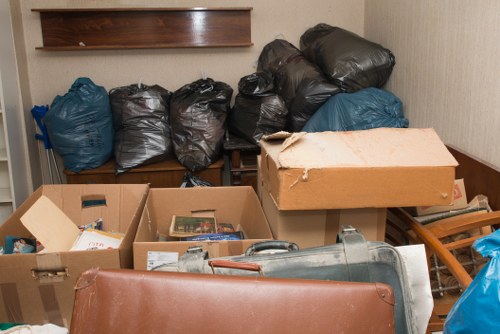
House clearance often overlaps with other domestic removal needs, which is why it helps to think in terms of item groups as well as rooms. Furniture, loose household goods, stored boxes and obsolete fittings each raise slightly different handling questions. Some items need dismantling; others can be lifted as they are. Smaller goods may need sorting before loading, especially when the household wants to keep some belongings and remove only the rest. That distinction keeps the service practical and focused.
When a property contains a large amount of furniture, the work may be split across several stages so that the largest pieces are removed first and the remaining contents are easier to reach. This is especially sensible where rooms are crowded or where one item blocks access to another. A careful sequence also reduces unnecessary handling. If furniture is the main issue, a dedicated furniture clearance approach can be the right match, with the broader house clearance used where the contents are more varied.
There are also cases where a property contains a mix of domestic items that are not all of the same type or condition. In those situations, a combined plan can make more sense than forcing everything into a single category. Items that are suitable for separate handling can be identified early, while general household items are grouped together. The result is a tidier clearance and a more straightforward route through the work.
Lofts, storage areas and overlooked spaces
Many house clearances turn out to involve more than the main living rooms. Lofts, under-stairs cupboards, cellar spaces and storage corners often contain the items that have been left for later. These areas can be awkward because they are cramped, poorly lit or difficult to access, but they are also part of the house and deserve the same orderly approach as the rest of the property. Planning matters more here than in open rooms.
When these spaces are full of mixed belongings, a sensible first step is to decide whether the contents are being kept, sorted or removed. A loft clearance can include old boxes, seasonal items, spare furnishings and general household clutter, while a garage may hold a combination of domestic storage and older tools. The main point is to separate what is to remain from what is to go. That allows the work to proceed without unnecessary handling.
For these harder-to-reach spaces, consider whether the job is best handled as one general clearance or as a more specific task. A dedicated loft clearance page is useful when the bulk of the work is concentrated above the main rooms. Where the challenge is instead a mixed domestic store of household goods, the broader house clearance service can bring everything together in one plan.
Working through the house in a practical order

The order in which rooms are cleared can make a noticeable difference to how smooth the job feels. Some households prefer the most cluttered spaces to be tackled first, while others want living areas cleared so that the property becomes easier to move around in. There is no single correct sequence, but there is value in setting one before the work begins. That reduces backtracking and helps preserve a clear route through the house.
In a typical domestic clearance, the process may begin with the easiest-access rooms and then move to heavier or more awkward spaces. This can help create room for sorting, stacking and carrying items through the property. If a room contains both items to keep and items to remove, it is better to mark that distinction before work starts rather than making decisions in the middle of the clearance. That keeps the job calm and organised.
If you need a focused house clearance in Chigwell and want to compare broader domestic options, our house clearance page provides the main service route while the related sections cover specific item groups and property areas. Use the service that fits the contents best, then build the quotation around the real work involved. Take the first step by outlining the property and the rooms involved.
House clearance, waste and recycling choices
Not all household contents are treated in the same way, and that is one reason a proper clearance is different from simply moving things out of sight. Some items are suitable for recycling routes, some are reusable, and some are general waste. The practical benefit of a professional clearance is that these streams can be managed in a more orderly way, rather than blending everything together. That is especially relevant where a property contains a broad mix of old domestic possessions.
For households with more general surplus material, a wider removal service can be helpful alongside the domestic clearance itself. See waste removal when the contents are less about furniture and more about mixed household material or accumulated items that need taking away. If your priority is to deal with the contents in an organised and sensible way, it helps to match the service to the type of material involved, not just to the room it came from.
Responsible handling also matters when the job has a sustainability element. A sensible clearance is one that makes space in the property while keeping the handling of items clear and intentional. If you are choosing between a broad clearance and a narrower item-based removal, think about the type of belongings, the quantity and the route they will take out of the property. That is often the best way to decide on the most suitable option.
Enquiries and next steps
When you are ready to move ahead, the easiest way to start is with a simple description of the house and the contents. A few sentences are usually enough to show whether the work is a full clearance, a partial clearance or a room-specific job. If there are especially bulky pieces, awkward access points or items that need separating from the rest, include that in the first note. It helps keep the quotation process practical and direct.
Some customers prefer to gather this information in one go, while others note it down room by room. Either approach works, provided the outline is clear. If you want to discuss a specific domestic project or compare the service with other removal options, the site also includes pages for about us and contact us. The important thing is to describe the clearance honestly so the work can be matched to the right service.
If your property needs a straightforward household clearance in Chigwell, the best next step is to request a quotation with the room list and item types to hand. That gives a clean basis for planning, and it keeps the focus on the actual work rather than unnecessary guesswork. The clearer the brief, the easier it is to arrange the right clearance for the home.